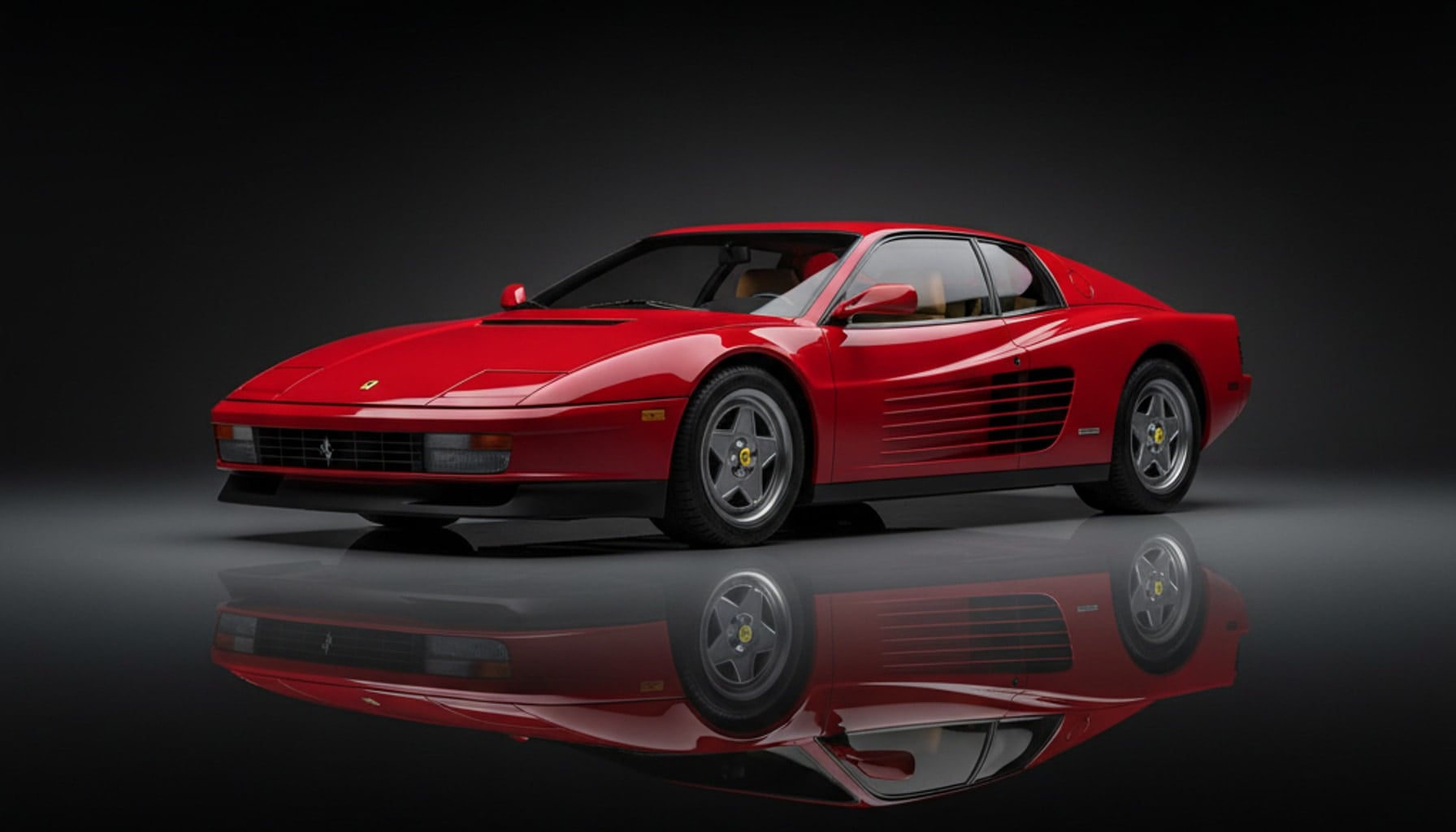
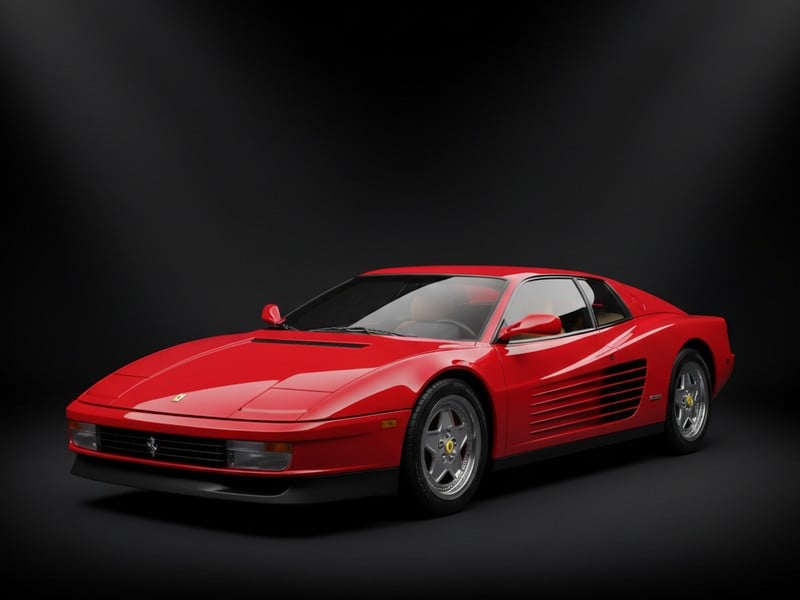
What is the Ferrari Testarossa?
One of the most recognizable Ferraris with its distinctive side strakes.
Complete Technical Specifications
Comprehensive performance data and technical details for the Ferrari Testarossa
Engine
Dimensions
Production
Performance
Transmission
Ferrari Floor Mat Best Practices
Safety and quality guidelines for your Ferrari floor mats
Good Practices
5 Essential Tips- Use OEM-fit mats: Specifically designed for your Ferrari model to prevent pedal interference.
- Secure with clips: Always use factory retention clips to prevent mat sliding.
- Choose quality materials: Opt for premium leather or high-grade materials that match your interior.
- Regular maintenance: Clean with appropriate products to preserve luxury appearance.
- Check fitment regularly: Ensure mats remain properly positioned after driving.
Common Mistakes
5 Things to Avoid- Never use universal mats: Generic mats can interfere with pedals and compromise safety.
- Don't stack mats: Layering mats is extremely dangerous and can jam pedals.
- Avoid cheap materials: Low-quality mats damage carpet and look out of place in a Ferrari.
- Don't skip installation: Improperly installed mats that slide are a serious safety hazard.
- Ignore wear signs: Replace mats when they show excessive wear or damage.
Frequently Asked Questions
Everything you need to know about this Ferrari model
The Ferrari Testarossa boasts a top speed of approximately 180 mph (290 km/h). This was considered exceptionally fast for its time, making it a benchmark sports car. The flat-12 engine provided ample power for impressive acceleration and high-speed cruising.
The Ferrari Testarossa generates around 380 horsepower from its 4.9-liter flat-12 engine. This power output allows for a quick 0-60 mph acceleration time, contributing to its reputation as a high-performance supercar. The engine's responsiveness is a key feature.
The Testarossa’s iconic status stems from its striking design, highlighted by its distinctive side strakes and wide stance. Its appearance in popular culture, especially in shows like "Miami Vice," cemented its place as a symbol of 1980s wealth and performance. It represented Ferrari's commitment to pushing design boundaries.
The Ferrari Testarossa was produced from 1984 to 1996. It underwent some revisions during its production run, including the 512 TR and F512 M variants, but the overall Testarossa design remained recognizable throughout its lifespan.
The value of a Ferrari Testarossa varies significantly based on condition, mileage, and history, but generally ranges from $100,000 to over $250,000. Well-maintained examples with low mileage tend to command the highest prices due to increased collectibility.
Both the Ferrari Testarossa and Lamborghini Countach were iconic supercars of the 1980s. The Testarossa offered a more refined driving experience, while the Countach was known for its more aggressive styling and raw performance. They both appealed to different kinds of supercar enthusiasts.
Yes, the Ferrari Testarossa is relatively expensive to maintain. Parts can be costly, and specialized mechanics are often required for servicing its complex flat-12 engine. Regular maintenance is crucial to preserve its value and performance.
Yes, the Ferrari Testarossa features power steering. This helps to improve the car's maneuverability, especially at lower speeds, and provides a more comfortable driving experience compared to earlier, less-assisted Ferraris.
The Ferrari Testarossa can accelerate from 0 to 60 mph in approximately 5.2 seconds. This quick acceleration, coupled with its high top speed, made it a formidable performance car of its era.
Ferrari produced around 7,177 Testarossa models from 1984 to 1991. After that the 512 TR and F512 M were produced in smaller numbers. This relatively high production number, compared to other Ferraris, has contributed to its wider recognition.
The strakes, or side slats, on the Ferrari Testarossa serve a functional purpose: to channel air into the side-mounted radiators. This innovative design allowed for a more efficient cooling system and contributed to the car's unique and memorable styling.
The Ferrari Testarossa is powered by a 4.9-liter flat-12 engine. This engine configuration provides a low center of gravity and smooth power delivery, contributing to the car's balanced handling characteristics and overall performance.
While a supercar, the Ferrari Testarossa is considered relatively comfortable for long drives, especially compared to some of its contemporaries. The interior is reasonably spacious, and the power steering contributes to easier handling in everyday driving situations.
Yes, various aftermarket companies offer floor mats specifically designed for the Ferrari Testarossa. These mats help protect the original carpets from wear and tear, preserving the interior's condition. Opting for a high-quality set is recommended for optimal protection.
Common issues with the Ferrari Testarossa include fuel system issues, electrical problems, and cooling system maintenance. Regular servicing is crucial to prevent these issues. The complexity of the engine and drivetrain means maintenance can be expensive.